Cold email outreach in 2026: what actually works now
Cold email outreach in 2026: the strategy, infrastructure, copy, and cadence that book meetings. What changed, what still works, what to stop doing.
Cold email outreach in 2026 is harder than it was three years ago, and the gap between teams that book meetings consistently and teams that send into the void has never been wider. Average reply rates across the platform-wide benchmark dropped from 8.5 percent in 2019 to 3.43 percent in 2026, according to the Instantly cold email benchmark report. At the same time, top-performing teams are pulling 10 to 18 percent reply rates on signal-based campaigns. The skill ceiling went up. The skill floor stayed where it was.
This guide is the cold email outreach playbook we work from on every campaign audit and every infrastructure build. It is structured around the five operational pillars that determine whether a cold email outreach program produces pipeline or just produces noise: list quality, sending infrastructure, copy and messaging, sequence cadence, and measurement discipline. Each pillar gets a section below with the specific decisions and thresholds that matter in 2026.
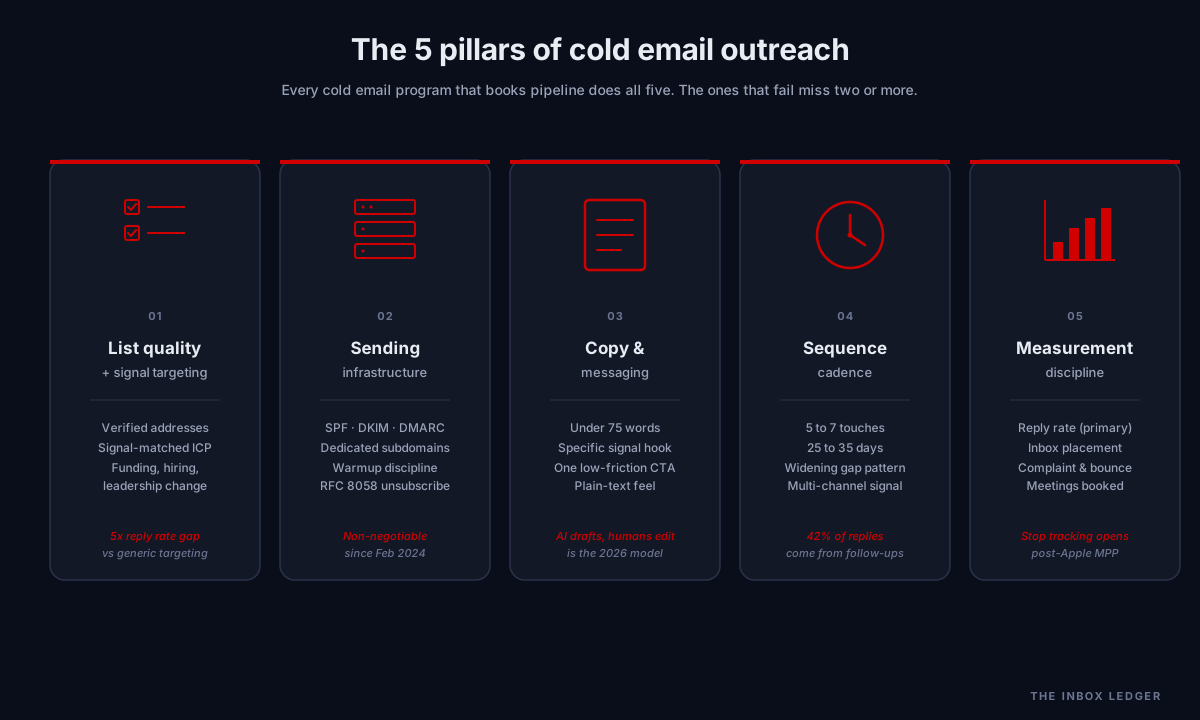
What cold email outreach actually means in 2026
Cold email outreach is unsolicited first-touch email to prospects with no prior relationship to your brand, sent for a specific business outcome (usually a meeting, a demo, or the start of a sales conversation). The definition has not changed. What changed is the execution required to make it work.
Three forces reshaped the space between 2023 and 2026:
The deliverability tightening. Google and Yahoo’s February 2024 sender requirements, expanded by Microsoft in May 2025 and tightened again by Gmail in November 2025, made authentication mandatory for any domain sending more than a few thousand messages per day. Cold email programs without SPF, DKIM, DMARC, and RFC 8058 one-click unsubscribe stopped landing in the inbox at all.
The AI saturation. Industry estimates put more than 40 percent of cold email traffic in 2026 as AI-generated. The result is a sophisticated “delete reflex” among buyers, with research showing 73 percent of professionals delete templated-feeling emails on sight and 69 percent of decision-makers reporting they are bothered when they sense AI was used to write a cold outreach email. Generic personalization tokens stopped fooling anyone two years ago.
The signal layer. The campaigns winning in 2026 are not the ones sending the most volume. They are the ones targeting prospects with active buying signals: funding rounds, leadership changes, hiring triggers, technology adoption events, expansion announcements. Signal-based cold email outreach achieves 15 to 25 percent reply rates against the platform-wide 3.43 percent average. The 5x to 7x performance gap is structural, not incremental.
What this means for anyone building a cold email outreach strategy from scratch: the old “blast 10,000 prospects with a personalized opener” approach does not work and has not worked since late 2024. The 2026 playbook is more deliberate, more technical on the infrastructure side, and more selective on the targeting side.
Pillar 1: List quality and signal-based targeting
Every cold email outreach campaign starts with a list, and the list quality determines the ceiling of everything else. In 2026, list quality means two things: the addresses are accurate and verified, and the prospects on the list have a reason to care right now.
Accuracy: verification before every send
B2B email lists decay at roughly 25 to 28 percent per year. A list verified six months ago will produce 5 to 15 percent bounces on its next send. Above 2 percent bounce rate, mailbox providers start filtering you. Above 5 percent and Gmail’s sustained-bounce enforcement (active since November 2025) can permanently 5xx-reject your domain.
The rule is simple: re-verify before every major send. Cost is roughly 4 cents per address through a quality verification service. The reputation damage from skipping verification costs months to repair.
Signal-based targeting
This is the larger leverage. Generic ICP-based prospecting (target all CMOs at SaaS companies between 50 and 500 employees) is the 2022 playbook. The 2026 playbook layers signals on top of ICP:
- Funding signals: Series A, B, or C raises in the last 90 days
- Hiring signals: actively recruiting roles relevant to your product
- Leadership change signals: new VP, Director, or C-level in a buying role
- Technology signals: just adopted (or just churned from) a competing or complementary tool
- Expansion signals: opened a new office, entered a new geography, launched a new product line
A campaign sent only to prospects matching at least one fresh signal sees reply rates 3x to 7x higher than the same ICP without signal filtering, in the data we see across audits. The lists are smaller. The reply rates are dramatically better. The math works.
For the deliverability foundations that signal-based campaigns sit on top of, see our 47-point cold email deliverability checklist.
Pillar 2: Sending infrastructure
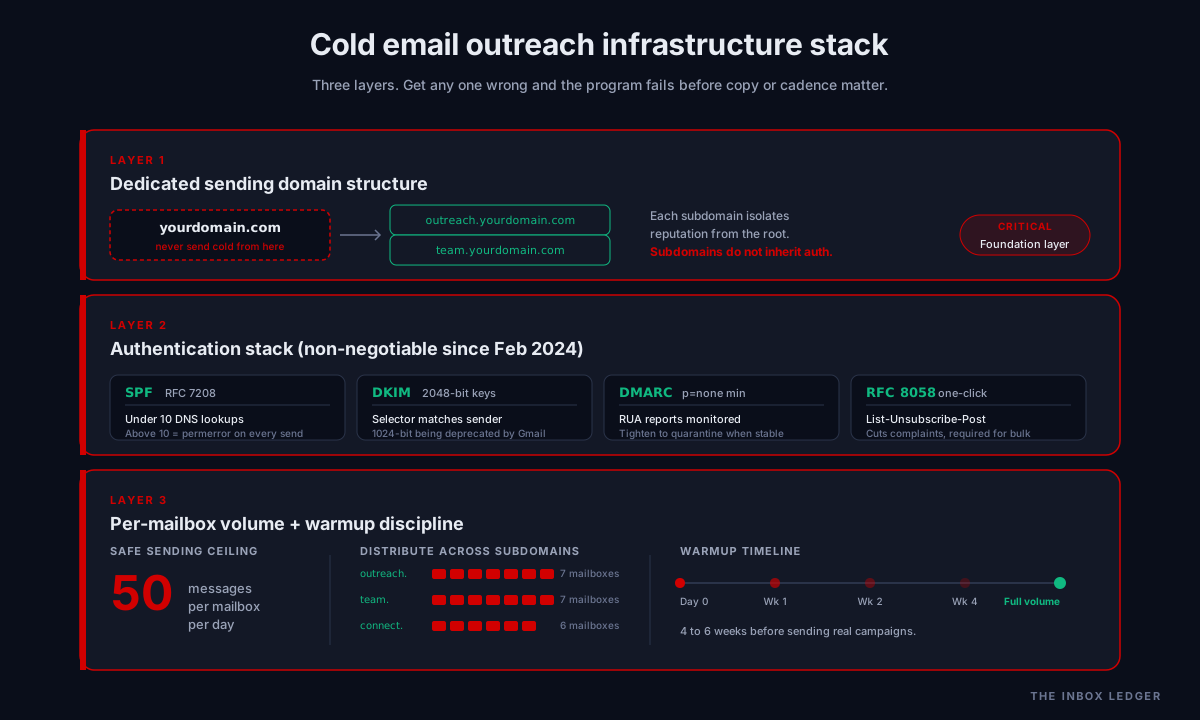
The infrastructure decisions you make in the first month of building a cold email outreach program will determine your reputation for years. Three structural decisions matter most.
Dedicated sending subdomain
Never send cold email outreach from your root domain. Reputation damage from cold outreach spills over to transactional mail, account team communications, and anything else sent from the parent domain. The fix is dedicated subdomains like outreach.yourdomain.com or team.yourdomain.com, each with its own complete authentication stack.
Subdomains do not inherit SPF, DKIM, or DMARC from the parent. Each subdomain needs its own records. If you scale past 5 to 6 sending mailboxes, distribute across multiple subdomains to avoid concentrated reputation patterns that look robotic to filters.
Authentication non-negotiables
The four authentication requirements that hard-constrain every cold email outreach program in 2026:
- SPF with under 10 DNS lookups (RFC 7208 ceiling). Every
include:counts. Above 10 = permerror on every send. - DKIM with 2048-bit keys, selector matching what your sending platform actually signs with.
- DMARC at minimum
p=nonewith RUA reporting going to an aggregator you actually monitor. - RFC 8058 one-click unsubscribe (List-Unsubscribe-Post header). Required for bulk senders. Reduces complaint rates because recipients who want out hit the one-click button instead of “Report Spam.”
For depth on each protocol and the configuration mistakes we see most often, see the email deliverability pillar guide.
Volume and warmup discipline
The safe ceiling for cold email outreach in 2026 is 50 messages per mailbox per day for Google Workspace or Microsoft 365 inboxes. Some senders push to 75 or 100 with established reputation. New domains and IPs require 4 to 6 weeks of warmup before reaching full volume.
The volume math behind any campaign:
Mailboxes needed = (Prospects × Touches) ÷ (Days × 50)
A 6-touch sequence to 5,000 prospects over 30 days needs 20 mailboxes minimum. The deeper version of this calculation and how to size mailbox capacity correctly is in our cold email follow up guide.
Pillar 3: Copy and messaging
The copy is where most cold email outreach guides go wrong, because they treat copy as if it can compensate for weak targeting. In 2026, copy is what converts the prospects your targeting already qualified. Generic-good copy on signal-matched prospects outperforms great copy on poorly-targeted prospects every time.
What the 2026 copy looks like
Lavender’s 2025 analysis of more than 100 million cold emails found that AI-assisted but human-edited cold email outreach outperformed both fully AI-generated emails and fully human-written emails. The model that works: AI surfaces signals and drafts the first version, humans add the judgment, voice, and final-mile editing.
The structural elements of cold email outreach copy that consistently converts in 2026:
Subject lines under 50 characters. Mobile-readable. Specific to the prospect or signal. Avoid “quick question,” “circling back,” and any phrase that has been used a billion times. Aim for 40 to 50 characters to ensure full visibility on mobile where roughly a quarter of opens happen.
Under 75 words for the initial email. Below 75 words consistently outperforms longer emails at the first-touch position. The job is to earn a reply, not to make the full case. Save the longer pitch for after the conversation starts.
Specific signal reference. Name the signal that triggered the outreach. “Saw your Series B announcement last week” beats “I noticed you’re a growing company.” Specificity proves you actually researched the prospect.
One CTA, low friction. “Worth a 15-minute conversation?” converts better than “Are you free for a 30-minute demo next Tuesday at 2pm Eastern?” The lower the friction, the higher the reply rate. Booking time can happen on touch 2 or 3.
Plain text formatting. Cold email outreach in 2026 should render as plain text or near-plain text. Heavy HTML, logos, multi-color formatting, and complex layouts all trigger spam filters more aggressively. The visual standard is “a thoughtful person typed this,” not “a marketing team designed this.”
What stops working in 2026
A short list of cold email outreach patterns that worked in 2022 and no longer do:
Hi {First Name}, I hope this email finds you wellopeners- “Quick question” subject lines
- “Worth a chat?” without specifying about what
- Emails with three CTAs (book a call, reply, check out our website)
- Footers with logos, social icons, and marketing taglines
- “Was just thinking about you” warmth that nobody believes
The common pattern: anything that signals “this is templated outreach to a list” gets pattern-detected and deleted.
Pillar 4: Sequence cadence
Cold email outreach is not a single email; it is a sequence. The 2026 standard for B2B cold email outreach is 5 to 7 touches over 25 to 35 days, with widening gaps as the sequence progresses. Below 4 touches gives up the 42 percent of replies that come from follow-ups. Above 8 touches generates spam complaints faster than incremental replies.
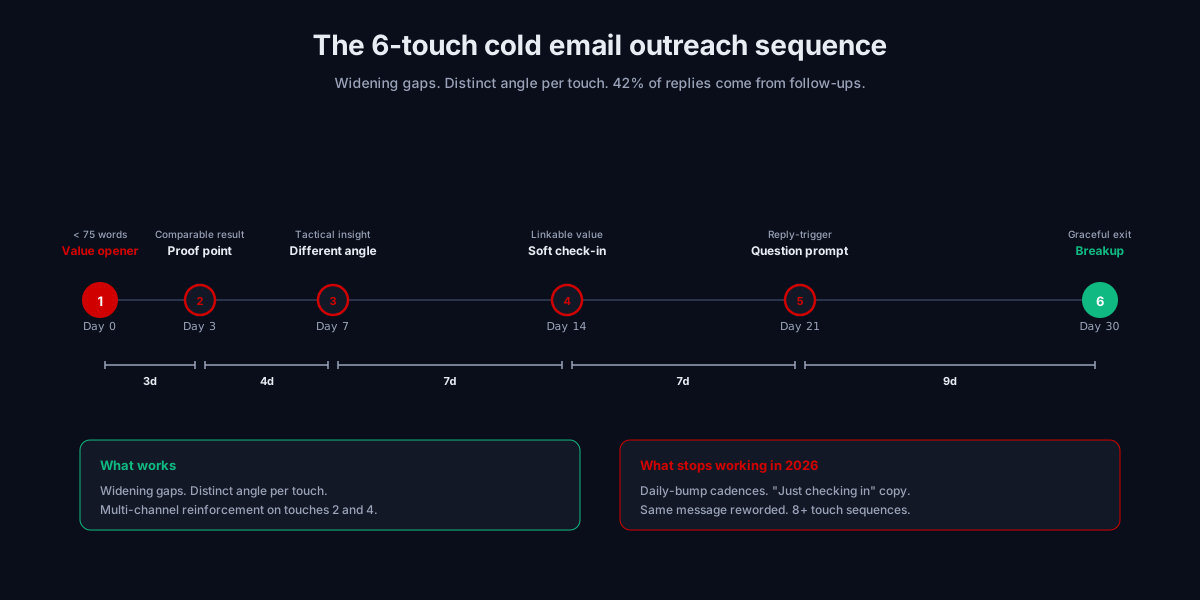
The widening-gap pattern that consistently performs:
- Day 0: Initial email
- Day 3: Follow-up 1 (proof point)
- Day 7: Follow-up 2 (different angle)
- Day 14: Follow-up 3 (soft check-in with new value)
- Day 21: Follow-up 4 (question prompt)
- Day 30: Follow-up 5 (graceful breakup email)
The breakup email consistently produces 15 to 20 percent of total replies despite being last. The framing matters: graceful exit, no guilt, an offer to circle back in 3 to 6 months.
For the full operator-grade breakdown of each touch, the angle to take, and what stops working, see our cold email follow up guide.
Multi-channel outperforms email-only
Industry data shows multi-channel sequences (email + LinkedIn + occasional phone) outperform email-only by roughly 287 percent in booked meetings. The integration pattern that works: cold email outreach is the primary channel, LinkedIn touches reinforce at strategic points (typically after touches 2 and 4), and phone is reserved for high-value prospects who showed engagement signals like opens or partial reads.
For LinkedIn-specific automation, every major provider operates in a gray area against LinkedIn’s terms of service. We do not recommend volume-based LinkedIn automation. Manual or semi-manual LinkedIn touches on signal-matched prospects are the safer pattern.
Pillar 5: Measurement discipline
What you cannot measure, you cannot improve. The cold email outreach metrics that actually matter, ranked by signal strength:
Reply rate. Total unique replies divided by delivered messages. The truest performance metric. Anything above 5 percent in 2026 is good. Above 10 percent is excellent. Below 3 percent indicates a list quality, deliverability, or copy problem.
Inbox placement. Not the same as delivery rate. Delivery rate is what your ESP reports (close to 99 percent if authentication is correct). Inbox placement is where the mail actually lands. Use a seed-list testing tool to measure across Gmail, Outlook, Yahoo, and corporate filters. Below 80 percent inbox placement is a structural problem.
Spam complaint rate. Should be under 0.1 percent. Above 0.3 percent triggers enforcement from Gmail, Yahoo, and Microsoft simultaneously. Trend matters more than the single number; a program at 0.08 percent climbing 10 percent month over month is heading for trouble.
Bounce rate. Should be under 0.5 percent on a healthy list. Above 2 percent on any single send triggers reputation damage. Above 5 percent sustained can trigger permanent rejections.
Booked meetings rate. Reply rate counts everything including unsubscribes and negative replies. Booked meetings is what matters to the business. Track this separately and use it to evaluate copy and offer changes, not deliverability changes.
Apple Mail Privacy Protection inflates open rates by 10 to 15 percent across most lists. Stop tracking open rate as a meaningful metric. Reply rate and meetings booked are the real performance indicators.
Common failure modes for B2B cold email outreach
The five patterns we see kill cold email outreach campaigns across audit after audit:
1. Authentication misconfigurations
SPF lookup overflow, DKIM selector mismatch after a platform migration, DMARC missing or set without RUA reporting. Any one of these silently breaks authentication for every message you send. Symptoms are gradual placement decay over weeks, not immediate failure.
2. Bought or scraped lists without verification
Apollo and ZoomInfo data quality has declined steadily. Scraped data from Sales Navigator is worse. Without a fresh verification pass before every campaign, expect 7 to 9 percent bounce rates and immediate reputation damage. We see this fail more cold email outreach programs than any other single mistake.
3. Sending pace problems
Daily-bump cadences (touch 2 the day after touch 1) trigger spam treatment regardless of authentication quality. Minimum 48 hours between touches; 72 hours safer. Batch-and-blast sending all messages at 9 AM Monday reads as robotic to filters; spread sends across business hours of relevant time zones.
4. Template-driven copy at scale
In 2026, AI-powered spam filters detect templated outreach even without explicit trigger words. The pattern matching looks at sentence structure, length distribution, opener type, and CTA pattern across the full sending program. A clever single template still gets caught when sent 5,000 times. The defense is genuine variation, ideally signal-driven.
5. No measurement, no iteration
The cold email outreach programs that compound improvement run weekly or biweekly reviews of the metrics above. The programs that stagnate set the campaign live and assume it works. Without measurement discipline, the gap between top and bottom performers widens with every campaign cycle.
A practical starting point
If you are figuring out how to do cold email outreach from scratch in 2026, the right order of operations:
- Buy a fresh sending domain. Not your primary domain. Something like
[yourbrand]outreach.comor a sending subdomain on your existing infrastructure. - Configure authentication completely. SPF under 10 lookups, DKIM with 2048-bit keys, DMARC with RUA reporting. Verify each test message lands authenticated in a Gmail inbox before scaling.
- Warm up for 4 to 6 weeks before sending real campaigns. Use a reputable automated warmup service.
- Build a small, signal-matched list first. 500 prospects who all match at least one fresh signal beats 5,000 generic ICP matches.
- Verify the list immediately before sending.
- Run a 6-touch sequence over 30 days with widening gaps and distinct angles per touch.
- Test inbox placement with a seed-list tool before the campaign goes out, then weekly during the campaign.
- Review the metrics weekly. Adjust copy and targeting based on what reply patterns reveal.
- Scale only after the first campaign produces above 5 percent reply rate. Below that, fix the targeting or copy before adding volume.
This is the cold email outreach foundation. Layer the follow up sequence framework on top, run it against the 47-point deliverability checklist before launch, and you will be operating in the top quartile of the cold email outreach landscape in 2026.
Frequently asked questions
Is cold email outreach still effective in 2026?
How do I do cold email outreach without landing in spam?
What is the best cold email outreach strategy in 2026?
How many emails should I send in a B2B cold email outreach sequence?
Should I use AI for cold email outreach copy in 2026?
What is a good reply rate for cold email outreach?
How much does cold email outreach cost to set up?
The bottom line on cold email outreach
Cold email outreach in 2026 rewards precision and punishes shortcuts more than it ever has. The teams winning are the ones treating it as a system: tight targeting, clean infrastructure, signal-driven copy, disciplined cadence, and weekly measurement review. The teams losing are still running 2022’s playbook on 2026’s inboxes.
If you are running cold email outreach now and want a structured audit of where your program sits, the 47-point cold email deliverability checklist covers the technical foundations. The cold email follow up sequence guide covers the cadence and copy layer. The how to improve email deliverability guide covers the 9 fastest interventions if something is broken.
Subscribe to the weekly briefing for cold email deliverability deep-dives, sequence teardowns, and tool comparison reports.
More on Cold Email
Best cold email software 2026: 8 platforms by use case
Best cold email software 2026: the 8 platforms that actually work, categorized by operator profile, with pricing, deliverability, and use case fit.
Cold email agency: how to choose one that books meetings
Cold email agency hiring guide for 2026: what they actually do, how to evaluate them, the red flags, the questions to ask, and when to hire vs DIY.
Cold email follow up: the 2026 sequence that gets replies
How to structure a cold email follow up sequence in 2026: number of touches, timing, what each message should say, and the deliverability rules.