Lemlist alternatives 2026: 8 tools by why you're leaving
Lemlist alternatives in 2026 grouped by why you are switching: per-seat pricing, cold email deliverability, multichannel needs, or simplicity.
Most articles about Lemlist alternatives present the same six or seven tools in roughly the same order: Saleshandy, Instantly, Smartlead, Woodpecker, Apollo, Snov.io. The framing misses what actually matters when evaluating lemlist alternatives. The right Lemlist alternatives for your team depend entirely on why you are leaving Lemlist, and the reasons produce genuinely different recommendations. A team leaving because per-seat pricing got expensive needs a flat-fee tool. A team leaving because cold email deliverability is weak needs a pure cold email platform, not another multichannel suite. A team that actually values the multichannel and personalization Lemlist is known for needs a different replacement than a team that never used those features. The generic listicle treats Lemlist as one product to swap; in practice your replacement depends on which part of Lemlist is failing you.
This guide is the decision framework we use on outbound consulting engagements when teams ask whether to leave Lemlist and which lemlist alternatives to evaluate. It covers the four most common reasons teams shop for Lemlist alternatives, the specific tools that solve each problem with honest tradeoffs, the real cost structures at different team sizes, and the migration patterns that work without breaking active campaigns. Written for sales teams that need their next outreach stack to actually fit the problem they have, not just rank well in another comparison post.
For the broader cold email context, see the best cold email software guide and the cold email outreach guide. For the deliverability foundation that determines whether any tool works, see the email deliverability pillar and the cold email deliverability checklist.
Why teams actually leave Lemlist (the four real reasons)
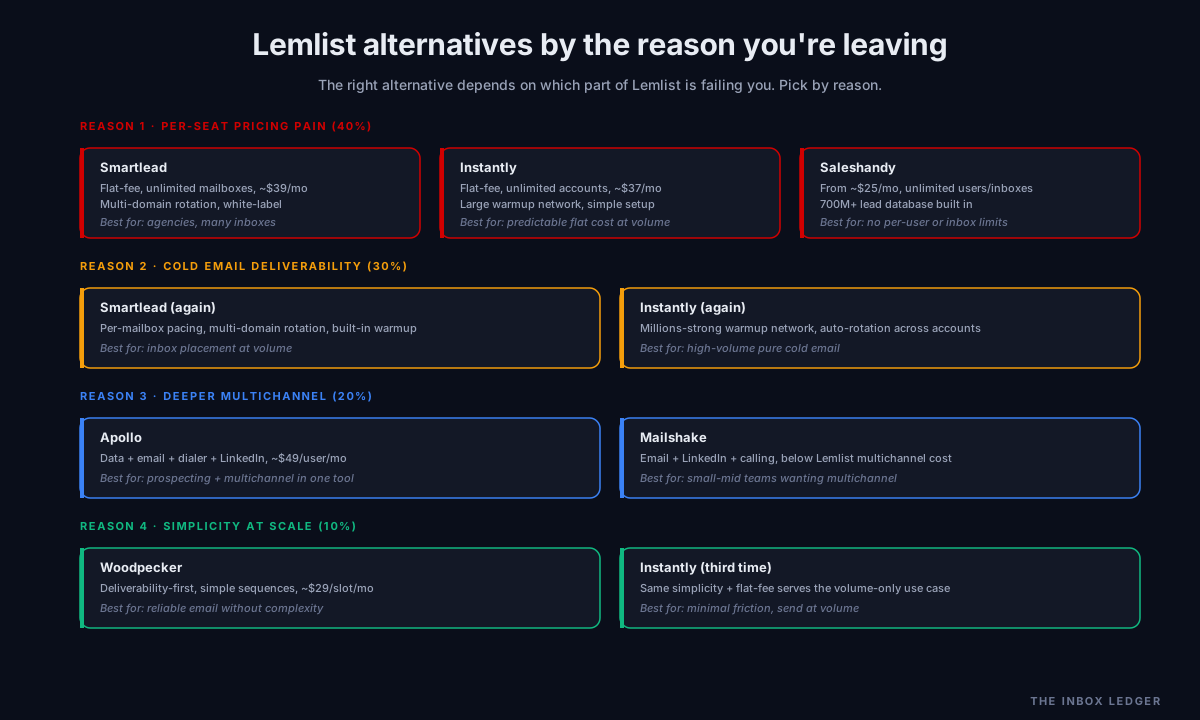
On the audits we run, teams shopping for Lemlist alternatives almost always fall into one of four categories. The category determines the right replacement. Generic listicles miss this because they treat every complaint as equivalent and rank the same lemlist competitors regardless of why you are actually leaving.
Per-seat pricing pain (about 40% of teams we see leaving). Lemlist charges per user: the Email Pro plan runs around $55 to $63 per user per month, and the Multichannel Expert plan around $99 per user per month. A five-person team pays $315 to $435 per month before adding domains and mailboxes. Teams hitting this shop for flat-fee or unlimited-inbox alternatives, not another per-seat platform.
Cold email deliverability weakness (about 30%). Lemlist is a multichannel sales engagement platform first; pure cold email deliverability is not its strongest dimension compared to tools built specifically for inbox placement. Teams running high-volume cold outbound where every point of inbox rate matters often find a dedicated cold email platform outperforms Lemlist on deliverability. The replacement category is pure cold email tools, not feature-equivalent suites.
Multichannel and personalization needs that outgrew Lemlist (about 20%). The opposite problem: some teams leave because they want deeper multichannel (more LinkedIn automation, WhatsApp, calling tasks) or richer enrichment than Lemlist provides. These teams need a more capable sales engagement platform or a programmable enrichment layer, not a simpler cold email tool.
Complexity and simplicity at scale (about 10%). Teams running high-volume campaigns sometimes find Lemlist’s feature density (image personalization, video personalization, multichannel sequencing) slows them down when all they need is reliable email sending at volume. These teams want a simpler, faster, email-first tool.
The replacement strategy follows the category. Pick the wrong one and you migrate to a tool that does not solve your actual problem, then repeat the search in twelve months.
The 8 Lemlist alternatives, categorized by reason
These are the 8 lemlist alternatives we see actually used in production by B2B teams in 2026. Grouped by the reason for leaving Lemlist they best solve.
For per-seat pricing pain: Smartlead, Instantly, Saleshandy
Smartlead uses flat-fee pricing with unlimited mailboxes rather than per-seat costs. Strong deliverability focus, multi-domain rotation, white-label features for agencies. Pricing starts around $33 to $39 per month and does not scale per user the way Lemlist does. Best fit for agencies and teams managing many inboxes where per-seat pricing was the breaking point.
Instantly is the other flat-fee leader. Unlimited email accounts, a large built-in warmup network, simple setup, and a B2B lead database. Pricing starts around $30 to $37 per month. Best fit for teams that want high-volume cold email with predictable flat costs and minimal setup complexity.
Saleshandy starts at around $25 per month with unlimited inboxes and unlimited users from the entry plan, plus a large lead database (700M+ professionals). Best fit for teams and agencies that want lead-finding and sending in one tool without per-user or per-inbox restrictions.
For cold email deliverability: Smartlead, Instantly
Smartlead appears here again because its deliverability architecture (per-mailbox sending pace, multi-domain rotation, built-in warmup) is purpose-built for inbox placement in a way a multichannel suite is not. Teams leaving Lemlist specifically for deliverability most often land here.
Instantly matches on the deliverability dimension with a large warmup network (millions of accounts) and auto-rotation across sending accounts. For pure cold email deliverability at volume, both Smartlead and Instantly tend to outperform multichannel-first platforms. The instantly vs smartlead comparison covers the decision between these two in depth.
For deeper multichannel and personalization: Apollo, Mailshake
Apollo bundles a contact database, email sequencing, a dialer, and LinkedIn tasks into one platform. Teams that want multichannel plus built-in data rather than just email find Apollo covers more of the stack. Pricing starts around $49 per user per month. Best fit for teams that want prospecting and multichannel outreach managed in one tool. See the Apollo alternatives guide if Apollo itself is not the right fit.
Mailshake offers multichannel outreach (email plus LinkedIn plus calling tasks) at pricing slightly below Lemlist’s multichannel plan. Best fit for small to mid-sized teams that want multichannel without the complexity or cost of the heavier platforms.
For simplicity at scale: Woodpecker, Instantly
Woodpecker is the deliverability-first, simplicity-focused option. Reliable email sequences, A/B testing, warmup, without the feature density that slows high-volume campaigns. Pricing starts around $29 per slot per month. Best fit for teams that want straightforward, reliable cold email without multichannel complexity.
Instantly appears a third time because its simplicity and flat-fee model also serve the “we just want to send at volume” use case. The same traits that make it good for deliverability and pricing make it good for teams that want minimal friction.
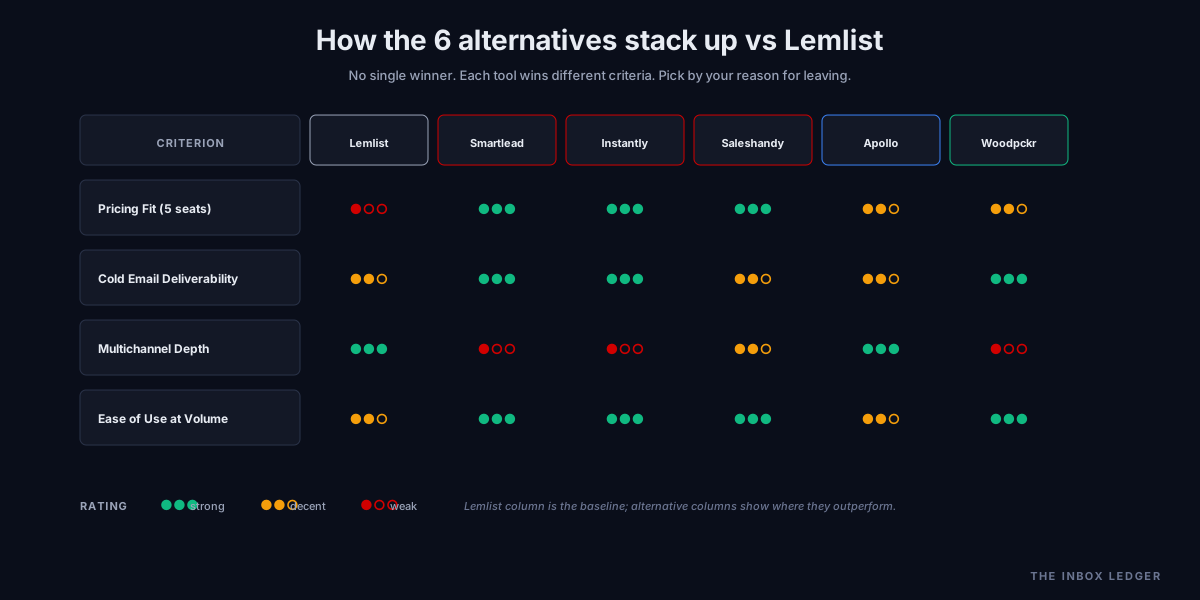
Pricing comparison: what each alternative actually costs
What we see most often is teams budget for the headline price and miss the real cost. Actual pricing at a five-person team:
Lemlist (baseline): Email Pro around $55 to $63 per user per month; Multichannel Expert around $99 per user per month. A 5-person team runs roughly $315 to $495 per month before domains and mailboxes.
Smartlead: flat-fee from around $39 per month, scaling by sending volume and features rather than seats. A 5-person team often runs $39 to $94 per month total. The biggest drop from Lemlist’s per-seat model.
Instantly: flat-fee from around $37 per month, scaling by volume. A 5-person team typically runs $37 to $97 per month total.
Saleshandy: from around $25 per month with unlimited users and inboxes on entry plans. A 5-person team often stays at the plan price rather than multiplying by seats.
Apollo: around $49 per user per month at the common tier. A 5-person team runs roughly $245 per month, plus the data costs. Per-seat like Lemlist but bundles data.
Mailshake: per-user, slightly below Lemlist’s multichannel tier. A 5-person team runs less than the equivalent Lemlist Multichannel Expert plan.
Woodpecker: around $29 per slot per month. Cost-effective for single-inbox users; can rise for teams managing many slots compared to flat-rate tools.
The pattern across these lemlist alternatives: if per-seat pricing is your reason for leaving, the flat-fee tools (Smartlead, Instantly, Saleshandy) produce the biggest cost drop. If you need multichannel, Apollo and Mailshake stay closer to Lemlist’s cost structure because the capability justifies it.
The migration mistakes that derail Lemlist replacements
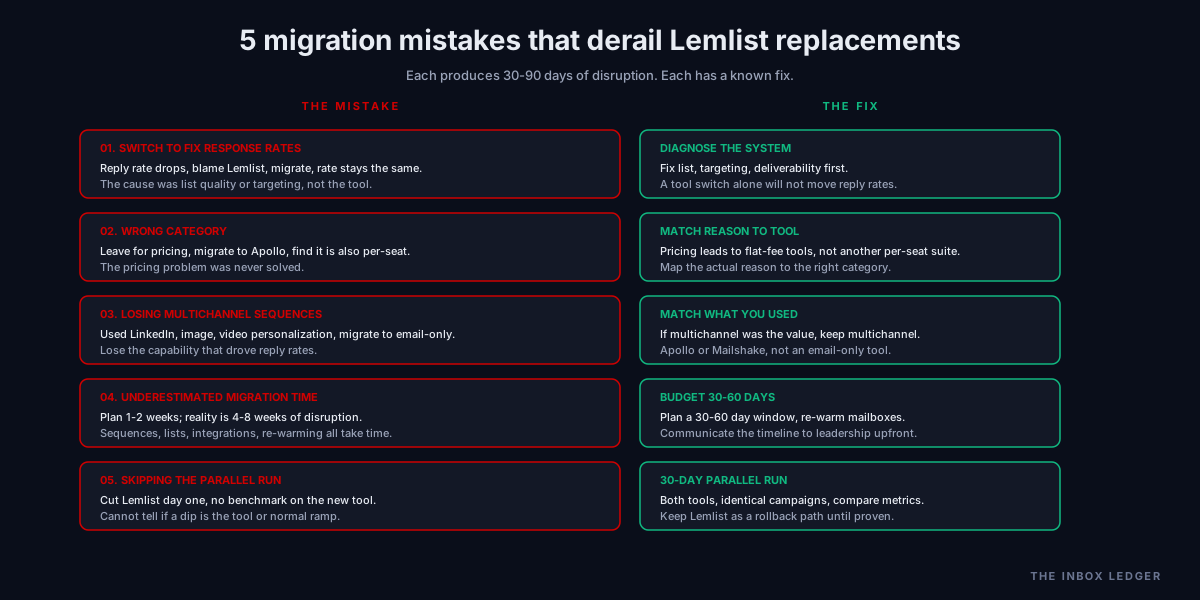
Five patterns we see most often on teams that tried and failed to replace Lemlist:
1. Switching tools to fix a response rate problem
The biggest mistake. A team’s reply rate drops, they blame Lemlist, they migrate, and the reply rate stays the same because the actual problem was list quality or targeting. Switching cold email tools does not fix declining response rates that come from the system around the tool. Diagnose the real cause before migrating.
2. Choosing the wrong category
A team leaving Lemlist for per-seat pricing migrates to Apollo because it is well-reviewed, then finds Apollo is also per-seat. The pricing problem was not solved. Match the alternative to the actual reason for leaving.
3. Losing the multichannel sequences
Teams that genuinely used Lemlist’s LinkedIn, image, and video personalization migrate to a pure email tool and lose those capabilities. If multichannel was the value, do not migrate to an email-only platform. Match the tool to what you actually used.
4. Underestimating migration time
Rebuilding sequences, re-importing lists with field mapping, re-establishing integrations, and re-warming mailboxes on the new platform takes 30 to 60 days for an active program. Most teams budget one to two weeks and find the real disruption runs four to eight weeks.
5. Skipping the parallel run
The teams we work with that migrate cleanly run both tools in parallel for 30 days on identical campaigns, comparing bounce rate, reply rate, and deliverability. Teams that cut Lemlist on day one have no benchmark and cannot tell whether a pipeline dip is the new tool or normal ramp adjustment.
The practical decision framework
The decision process we use when teams ask whether to leave Lemlist and which alternative to evaluate:
- Name the specific reason. Per-seat pricing, deliverability, multichannel needs, or simplicity. If you cannot name one clearly, spend two more weeks documenting which Lemlist behavior is actually failing before migrating
- Rule out the response-rate trap. If the reason is “cold email is not working,” fix list quality, targeting, and deliverability first; a tool switch alone will not move reply rates
- Map reason to category. Pricing leads to Smartlead, Instantly, or Saleshandy. Deliverability leads to Smartlead or Instantly. Multichannel leads to Apollo or Mailshake. Simplicity leads to Woodpecker or Instantly
- Verify the tool’s strength matches. Run a demo, run your own bounce and deliverability test on a 100-contact batch before committing
- Plan the parallel run. 30 days minimum running both tools on identical campaigns, comparing on bounce rate, reply rate, and deliverability
- Confirm what you actually used in Lemlist. If you used multichannel and personalization heavily, do not migrate to an email-only tool
- Pick the migration window. Q2 or Q3 rather than peak outbound quarters, unless the Lemlist problem is actively hurting current pipeline
- Keep Lemlist active for 30 days post-migration as a rollback path before canceling
When Lemlist is still the right choice
The teams we work with that stay on Lemlist tend to share two characteristics. If these match your situation, leaving may not solve your real problem:
You genuinely use the multichannel and personalization features. Lemlist’s image personalization, video personalization, and integrated LinkedIn automation are real differentiators for lower-volume, high-touch campaigns. If those features drive your reply rates, a cheaper email-only tool is a downgrade, not an upgrade. The per-seat cost buys capability you actually use.
You run high-touch, low-volume outreach. Lemlist’s design favors personalized, creative sequences over raw volume. Teams sending a few hundred highly personalized emails per month get more from Lemlist than from a high-volume deliverability tool built for thousands of sends. Match the tool to the motion.
The point is not that Lemlist is bad. It is genuinely strong at multichannel, creative personalization for high-touch outreach. The question of when to leave depends on whether you use those strengths or are paying per seat for features you never touch.
How Lemlist alternatives connect to your broader outbound stack
Choosing the right Lemlist alternative is one decision in a stack that determines whether outbound produces pipeline:
- Data source (Apollo, ZoomInfo, Clay, and the Apollo alternatives)
- List verification (EmailListVerify, ZeroBounce) for email hygiene
- Sending tool (the Lemlist alternative you choose here)
- Authentication (SPF DKIM DMARC setup, DMARC policy)
- Warmup (email warmup tools)
The sending tool matters, but it sits on top of data quality, authentication, and reputation. A great tool sending to a bad list with broken authentication still lands in spam; the DMARC specification (RFC 7489) defines the authentication layer every sending tool depends on. Teams that obsess over Lemlist alternatives without fixing the sender reputation and deliverability underneath get the same outbound results on a new platform.
For the operational sequence that turns the right tool into booked meetings, see the cold email outreach guide, the cold email follow-up guide, and the cold email templates guide. For the broader tool landscape, see the best cold email software guide and the cold email agency guide for the build-versus-outsource decision.
Frequently asked questions
What are the best Lemlist alternatives in 2026?
What is the cheapest Lemlist alternative?
Is Lemlist good for cold email deliverability?
Should I switch from Lemlist if my reply rates are dropping?
What's the difference between Lemlist and Smartlead?
How long does it take to migrate from Lemlist to another tool?
Does Lemlist or its alternatives include lead data?
The bottom line on Lemlist alternatives
Choosing the right lemlist alternatives is a diagnosis exercise, not a feature comparison. The teams we work with that migrate successfully name the specific reason they are leaving, rule out the response-rate trap, map the reason to the right category, and pick the tool that genuinely solves that problem. The teams that migrate poorly treat all lemlist alternatives as interchangeable and end up with the same problem on a different platform a year later.
The discipline that matters most: a tool switch does not fix a system problem. If cold email is underperforming because of list quality, targeting, authentication, or reputation, no Lemlist alternative changes that. Fix the sender reputation and deliverability foundation first, then pick the tool that fits your actual reason for leaving Lemlist.
For the operational baseline that makes any sending tool produce results, see the cold email deliverability checklist. For the broader tool landscape, see the best cold email software guide and the instantly vs smartlead comparison for the two tools teams most often choose when leaving Lemlist.
Subscribe to the weekly briefing for operator-grade cold email and outreach notes, one short email every week.
More on Comparisons
Apollo alternatives 2026: 8 tools by the problem solved
Apollo alternatives in 2026 grouped by the problem you actually have: data quality, pricing model, enrichment depth, GDPR compliance, or intent signals.
Instantly vs Smartlead in 2026: which one fits your stack
Instantly vs Smartlead for 2026: pricing, deliverability, warmup, agency features, and which platform fits solo operators vs cold email agencies.