B2B lead generation tools 2026: 10 picks by funnel stage
B2B lead generation tools in 2026 mapped to the funnel stage they actually solve: visitor capture, prospecting, enrichment, activation, and routing.
Most articles about B2B lead generation tools rank 15 to 35 platforms in a single flat list that mixes visitor-tracking software, outbound prospecting databases, email finders, chatbots, intent data providers, and CRMs as if they were comparable. They are not. A landing page builder and a contact database solve different problems at different stages of the funnel, and ranking them in one list against each other is the reason most teams end up paying for tools that cover the same gap twice while leaving other gaps wide open. The right b2b lead generation tools for your team depend entirely on which stage of your funnel is currently the bottleneck.
This guide is the funnel-stage map we use when teams ask which b2b lead generation tools to evaluate. It covers the five stages where lead generation tools actually do work (visitor capture, outbound prospecting, contact enrichment, activation, and routing), the 10 tools we see solving each stage well in 2026, how to identify which stage is your real bottleneck before picking a tool, and the integration patterns that turn five separate tools into a working pipeline rather than five subscriptions in parallel. Written for founders, RevOps leads, and sales teams who need pipeline that converts rather than a stack that looks impressive on a slide.
For the broader prospecting context, see the email finder tools guide, the email enrichment guide, and the Apollo alternatives guide. For the infrastructure underneath any outbound program, see the cold email infrastructure guide and the email deliverability pillar.
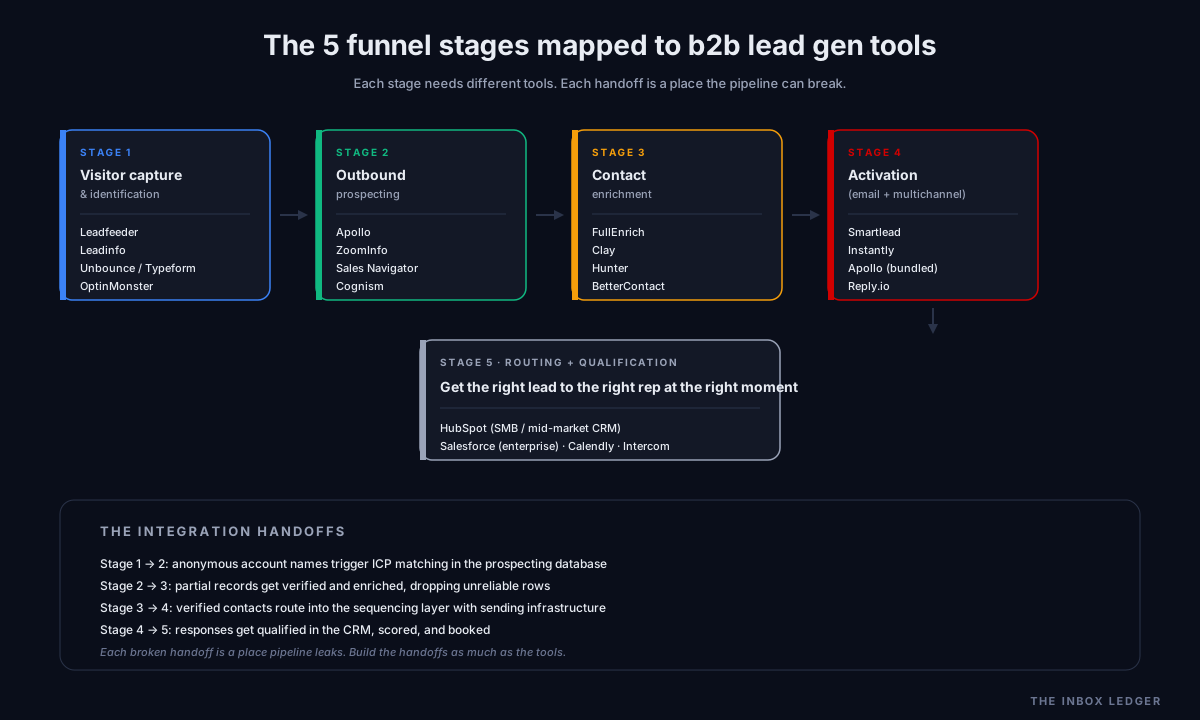
The five funnel stages, the gaps, and the right tools
On the audits we run, the most common mistake teams make when picking b2b lead generation tools is not the tool choice itself; it is misdiagnosing which stage of the funnel is broken. A team buying Apollo when their actual problem is that 98 percent of their website traffic is anonymous is solving the wrong problem. A team buying a chatbot when their outbound has a 50 percent bounce rate is doing the same. Identify the stage first, then pick the tool.
Stage 1: Visitor capture and identification. Turning anonymous website traffic into known leads. The job is identifying which companies visit your site, capturing form-fills from interested visitors, and routing the warm ones to sales before they bounce. Roughly 25% of teams we see have this as their bottleneck.
Stage 2: Outbound prospecting. Building lists of accounts and contacts that match your ICP from scratch using b2b prospecting tools and sales prospecting software. The job is database access, search filters, and the workflow to turn account research into a contactable list. About 35% of teams we see hire here.
Stage 3: Contact enrichment. Completing partial records with verified emails, phones, firmographics, and intent signals. The job is coverage, accuracy, and verification. About 20% of teams we see have this as the gap.
Stage 4: Activation. Reaching the prospects you found through email, LinkedIn, calling, or multichannel sequences. The job is sending infrastructure, deliverability, and sequencing logic. About 15% of teams.
Stage 5: Routing and qualification. Getting the right warm lead to the right sales rep at the right moment. The job is alerts, lead scoring, CRM workflow, and handoff hygiene. About 5% of teams put this first, though most struggle with it eventually.
The five stages need different tools. A team that picks one b2b lead generation tool and expects it to cover all five stages ends up with weak coverage everywhere; a team that picks one strong tool per stage gets a working pipeline.
Stage 1: Visitor capture and identification
About 98% of website visitors leave anonymously without filling out a form. For B2B sites, that anonymous traffic often includes accounts that match your ICP perfectly and are actively in-market. Visitor identification tools turn that anonymous traffic into a list of companies (and sometimes contacts) that visited specific pages, which becomes the warm-lead layer most outbound programs never see.
Leadfeeder (now part of Dealfront) identifies the companies visiting your website via a Google Analytics integration. Strong fit for teams already running GA4 with consistent traffic where the gap is converting that traffic into outbound. Free plan up to 100 companies, paid from around €99 per month. Most teams we see start here because the GA integration is easy and the data is decent.
Leadinfo is the European-focused alternative with similar visitor identification and GDPR-compliant data collection. Common pick for EU-based B2B teams where GDPR posture matters. Pricing on request, generally lower than Leadfeeder for mid-market.
Unbounce / Typeform / OptinMonster cover the lead-capture side of stage 1: landing pages, multi-step forms, and pop-ups that convert visitors into known leads. These are not visitor identification tools; they are lead capture tools, and the distinction matters. A visitor identification tool tells you which companies came; a lead capture tool gets named individuals to opt in. Most B2B teams need both for stage 1.
The integration pattern: visitor identification tool feeds anonymous account list into outbound prospecting workflow (stages 2 and 3); lead capture tool feeds named individuals into CRM and activation (stages 4 and 5).
Stage 2: Outbound prospecting
Once you know which accounts to target (either from visitor identification or from a defined ICP), stage 2 is building the actual contact list. This is where the large lead generation platforms compete most directly. This is the largest category of b2b lead generation tools and the one with the most overlap with email finder tools and Apollo alternatives, which cover the data layer in depth.
Apollo.io combines a 210M+ contact database with email sequencing, a dialer, and LinkedIn tasks. The strongest all-in-one for SMB and mid-market teams up to about 10 SDRs, where the bundled workflow saves more time than specialist tools save in capability. Per-user pricing starts around $49 per user per month. Above 10 SDRs the math typically inverts; the Apollo alternatives guide covers the migration patterns.
ZoomInfo holds the largest proprietary database (300M+ contacts) with built-in intent signals via Bombora. Best fit for enterprise teams 50+ SDRs where data quality determines pipeline output. Pricing starts at $15K to $30K per year minimum. Best in class for US enterprise targeting; the email enrichment guide covers when it is worth the cost.
LinkedIn Sales Navigator is the prospecting layer on top of LinkedIn’s professional network. Advanced search with 50+ filters, lead and account alerts, AI-driven research features. Core at $119.99 per month per license, Advanced from $159.99. Best fit when LinkedIn-led outbound is your motion and the buyer research happens on LinkedIn before email contact.
Cognism is the GDPR-compliant choice for European prospecting. Strong EU contact data, phone-verified mobile numbers under EU privacy regulations. Typical pricing $12K to $24K per year for mid-market. Best fit for B2B teams selling into European markets.
Stage 3: Contact enrichment
Stage 3 is taking partial records (a name and company, a LinkedIn URL, sometimes just a domain) and completing them with verified emails, phones, firmographics, and sometimes intent. This is the most active category in 2026 because the waterfall architecture has decisively beaten single-source enrichment. The email enrichment guide covers this in depth; the short version:
FullEnrich is the dedicated waterfall enrichment tool. 20+ providers queried in sequence, triple-pass verification, credits charged only on successful enrichment. Coverage runs 85 to 95 percent versus 40 to 60 percent for single-source. Best fit when contact data coverage is the bottleneck and you want waterfall without building it.
Clay is the programmable alternative for stage 3 (and stages 1, 2, and 4 if you want it to be). 50+ data sources composable into custom enrichment workflows with conditional routing and AI-assisted steps. Pricing from $149 per month with usage credits. Best fit for RevOps teams with workflow build capacity who want maximum flexibility.
Hunter appears here as the simpler single-source option for stage 3 when waterfall is overkill. Domain-based email lookup, verification included, free tier of 50 to 75 credits monthly. Best fit when stage 2 is well-handled by another tool and stage 3 just needs basic email completion at low volume.
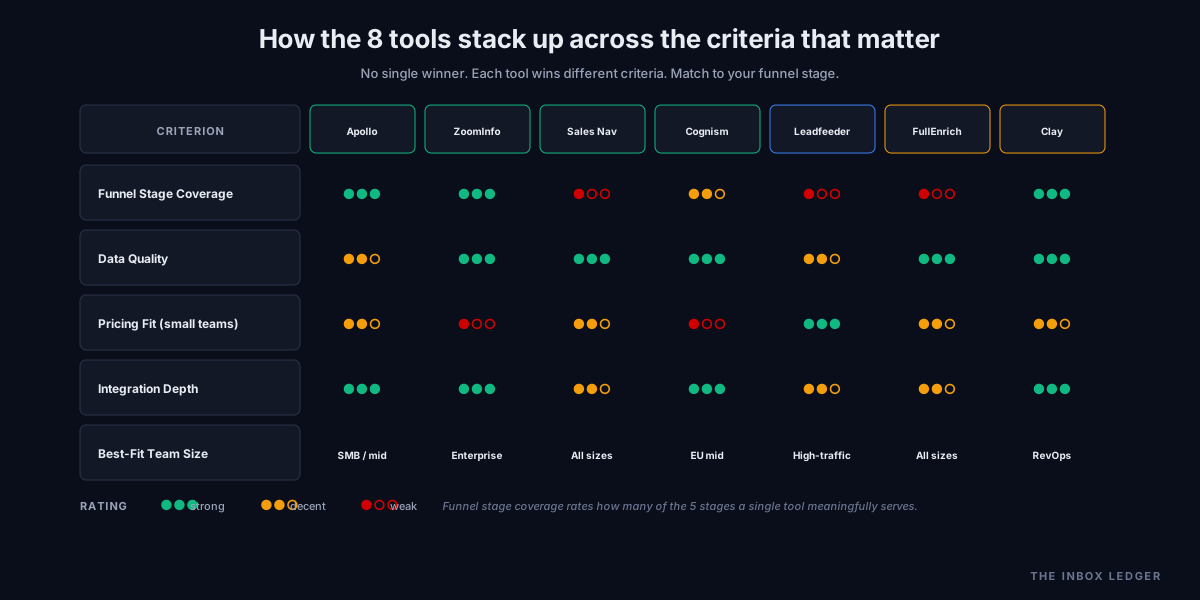
Stage 4: Activation
Finding prospects only matters if you can reach them. Stage 4 is the sending and sequencing layer that turns a list into actual outreach. The best cold email software guide and the instantly vs smartlead comparison cover this in depth; the funnel-stage view:
Smartlead is the deliverability-first sending platform. Unlimited mailboxes, multi-domain rotation, built-in warmup, flat-fee pricing from around $39 per month. Best fit when stage 4 needs to scale to thousands of sends per day without burning domains. The cold email infrastructure guide covers the broader build this sits inside.
Instantly is the other flat-fee leader with a large warmup network and simple setup. Common pick for teams that want predictable cost at volume. Same price band as Smartlead.
Apollo appears again here because the activation layer is bundled into its all-in-one workflow. For teams under 10 SDRs that are using Apollo for stage 2 already, the activation layer is “free” in the sense that it does not require a separate subscription. The tradeoff is per-user pricing scaling and deliverability that is not at the level of specialist tools.
Reply.io is the multichannel activation platform that combines email with LinkedIn automation and AI-assisted personalization. Strong fit when stage 4 needs to coordinate across channels rather than email-only.
Stage 5: Routing and qualification
Stage 5 gets the warm lead to the right rep at the right time, which is what turns a list of leads into pipeline. The CRM is the spine, and several specialist tools attach to it.
HubSpot is the SMB and mid-market default CRM with built-in routing, scoring, and a forever-free tier. The integration ecosystem is broad enough that most other b2b lead generation tools connect natively. Best fit for teams under 200 employees where CRM-plus-marketing-automation is the operational backbone.
Salesforce is the enterprise default. Powerful, configurable, and heavier than HubSpot to administer. Best fit for teams above 200 employees where the sales process complexity justifies the configuration effort.
Calendly handles the booking handoff once a lead is qualified, removing the manual scheduling step that loses warm leads to friction. Pairs with virtually every CRM and sales platform.
Intercom combines chatbot, live chat, and in-product messaging for inbound qualification. Best fit when the inbound motion is large enough to justify conversational qualification rather than form-based.
How the five stages stitch into one pipeline
The five stages are not independent; they are a sequence, and the integration pattern between them determines whether the stack produces pipeline.
The reference architecture we see working at most B2B teams in 2026:
- Stage 1 (visitor identification) feeds anonymous account names into a workflow that triggers ICP matching against your stage 2 database
- Stage 2 (prospecting database) returns contacts at those accounts, with completeness varying by provider
- Stage 3 (enrichment) completes partial records from stage 2, verifies them, and routes the verified contacts into the activation layer
- Stage 4 (sequencing and sending) reaches the verified contacts via email, LinkedIn, or multichannel, with sending infrastructure tied to cold email infrastructure
- Stage 5 (routing) takes the responses, qualifies them in the CRM, and books the meeting
Each handoff is a place where the pipeline can break. The most common breaks we see: bad data from stage 2 producing high bounces in stage 4 (covered in email hygiene and sender reputation), or warm leads from stage 1 sitting in a CRM with no routing rule (a stage 5 problem). Building the stack means building the handoffs as much as picking the tools.
Common b2b lead generation tools mistakes
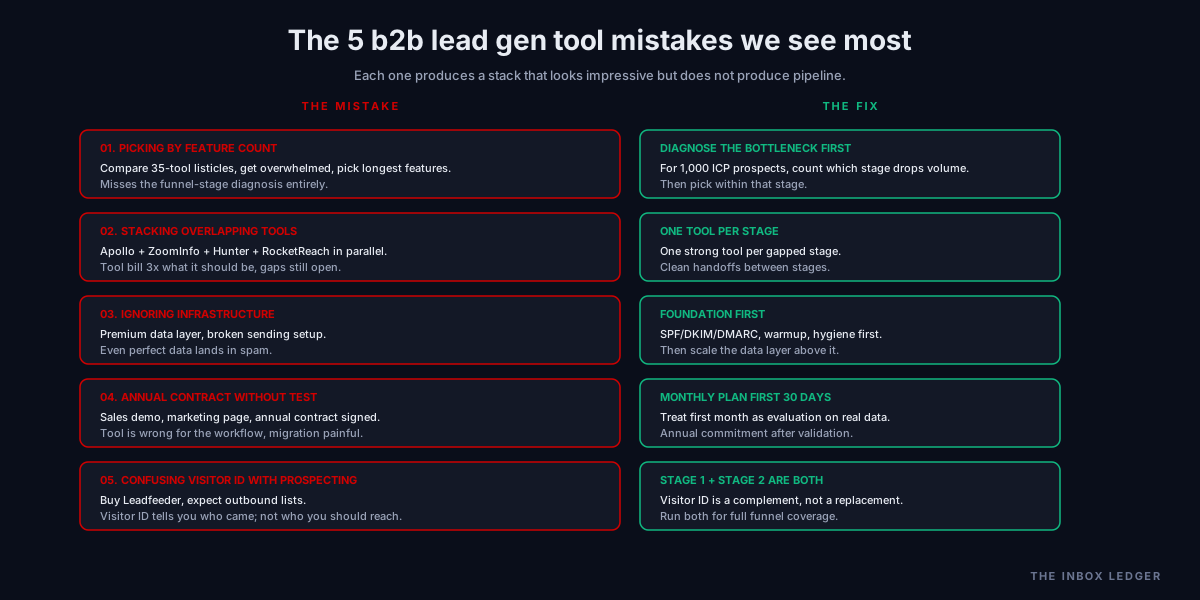
Five patterns we see most often when teams pick lead generation software:
1. Picking by feature count rather than funnel gap
The most common mistake. Teams compare 35-tool listicles, get overwhelmed, and pick the tool with the longest feature list rather than the tool that closes their specific gap. The fix is the diagnosis above: identify which stage is bottlenecked first, then pick within that stage.
2. Stacking overlapping tools
Buying Apollo plus ZoomInfo plus Hunter plus RocketReach in parallel because each marketing page makes a different case. The result is overlapping stage 2 and 3 coverage, missed stage 1 and 5, and a tool bill three times what it should be. The fix is one strong tool per stage, not four tools for the same stage.
3. Ignoring the infrastructure underneath
Buying premium b2b lead generation tools while running stage 4 on a misconfigured sending setup. Even perfect data lands in spam through broken infrastructure, especially after Google’s bulk sender requirements and Microsoft’s high-volume sender enforcement tightened the bar in 2024-2025. The fix is the cold email infrastructure guide and the SPF DKIM DMARC setup guide before scaling the data layer.
4. Annual commitment without a test
Sales demo, marketing page, annual contract. The tool produces different results than expected, migration is painful. The fix is monthly plans first, 30 days of real data on your workflow before committing annually, and a test panel on your actual ICP (covered in the email finder tools guide and email enrichment guide).
5. Confusing visitor identification with prospecting
Buying Leadfeeder and expecting it to produce outbound lists. Visitor identification tells you which accounts visited; it does not tell you which accounts you should reach. The fix is treating stage 1 as a complement to stage 2, not a replacement.
The practical b2b lead generation tools decision framework
The decision process we use when teams ask which lead generation tools to evaluate:
- Diagnose the bottleneck. For 1,000 ICP prospects you should reach this quarter, how many are you actually reaching, and which stage are you losing them at? The answer points to the stage that needs a tool
- Pick one strong tool per stage that matters. Most teams need stages 2, 3, 4, and 5 covered immediately; stage 1 is additive for teams with significant inbound traffic
- Verify the integration pattern. Each tool must hand off cleanly to the next stage. A stage 2 tool with no native enrichment integration adds a manual step that breaks the flow
- Start monthly, commit annually only after 30 days. The demo always looks good; the data on your workflow is the only thing that matters
- Size the stack to your team. Under 5 SDRs: Apollo or similar all-in-one covering stages 2-4. 5-20 SDRs: specialist tools per stage. 20+ SDRs: enterprise tools with deeper integration
- Run the underlying infrastructure check. Sending infrastructure, authentication, reputation, list hygiene before scaling the data layer above it
- Plan for ongoing maintenance. Lead generation tools are not set-and-forget; data decays at roughly 25% per year, sending rules tighten, integrations break. Budget the time
- Measure cost per booked meeting, not cost per tool. A $200/month tool that produces 10 meetings is cheaper than a $50/month tool that produces 1
The discipline that matters: the right b2b lead generation tools are the ones that close your specific gap, not the ones that rank highest in generic listicles. Match tool to stage, stage to bottleneck, bottleneck to actual ICP coverage data.
How b2b lead generation tools fit your broader outbound stack
The lead generation tools choice is one layer in a stack that determines pipeline outcomes. The full b2b lead generation tools stack:
- Data sourcing and prospecting (the email finder tools guide, Apollo alternatives guide, and email enrichment guide for the data layer)
- List verification (the email hygiene guide for the bounce-rate discipline)
- Sending infrastructure (the cold email infrastructure guide, the best cold email software guide, and the instantly vs smartlead comparison for the platforms)
- Authentication (the SPF DKIM DMARC setup guide and DMARC policy guide)
- Reputation and warmup (the sender reputation guide and email warmup tools guide)
- Sequencing and messaging (the cold email outreach guide, cold email templates guide, and cold email follow-up guide)
- Multichannel layer (the Lemlist alternatives guide covers the multichannel platform landscape)
The b2b lead generation tools layer sits upstream of activation but downstream of infrastructure. The best b2b lead generation tools cannot save a program with broken sending infrastructure or no list verification discipline. The right pattern is building the foundation (infrastructure, authentication, reputation) before scaling the data layer, then layering the lead generation tools on top to drive volume into a system that can handle it.
For the operational baseline that turns leads into booked meetings, see the cold email deliverability checklist and the how to improve email deliverability walkthrough. For the build-versus-outsource decision when running outbound at scale, see the cold email agency guide.
Frequently asked questions
What are b2b lead generation tools?
What is the best lead generation software for B2B sales?
How much do b2b lead generation tools cost?
Do I need multiple lead generation tools or just one?
What is the difference between lead generation and lead capture?
Can I use AI for B2B lead generation?
How do I choose the right b2b lead generation tool for my team?
The bottom line on b2b lead generation tools
The b2b lead generation tools decision is a funnel diagnosis exercise before it is a tool comparison exercise. The teams we work with that build working stacks identify which of the five stages (visitor capture, outbound prospecting, contact enrichment, activation, and routing) is currently the bottleneck, pick one strong tool to close that stage, verify the integration handoff to the adjacent stages, and only then expand to additional stages as new bottlenecks surface. The teams that pick poorly compare 35-tool listicles that mix categories that do not belong together, end up with overlapping stage 2 and 3 coverage, and skip stages 1 and 5 entirely.
The discipline that matters most: lead generation tools sit on top of an infrastructure stack, and the best data-layer tools in the world cannot save a program with broken sending infrastructure, missing authentication, or no list verification (visible within days in Google Postmaster Tools when things go wrong). Build the foundation first (cold email infrastructure, SPF DKIM DMARC, sender reputation), then layer the lead generation tools on top to drive volume into a system that can convert it.
For the broader prospecting context, see the email finder tools guide, Apollo alternatives guide, and email enrichment guide. For the deliverability and infrastructure foundation, see the email deliverability pillar and cold email deliverability checklist.
Subscribe to the weekly briefing for operator-grade lead generation and outbound notes, one short email every week.
More on Outbound Sales
Email enrichment 2026: 8 tools by what you're enriching
Email enrichment in 2026: waterfall vs single-source, the 8 tools by job, the data decay reality, and the verification step vendor benchmarks obscure.
Email finder tools 2026: 8 picks by job to be done
Email finder tools in 2026 categorized by job: single lookups, bulk prospecting, coverage maximization, CRM enrichment, or sequencing-included workflow.